flowchart LR
A[Researchers design survey
• Define research questions
• Develop modules
• Build Survey123 form] --> B{Pilot test OK?}
B -->|Yes| C[Staff training]
B -->|No| A

C --> D{Second pilot test OK?}
D -->|Yes| E[Data Collection]
D -->|No| C

E --> F{Quality OK?}
F -->|Yes| G[Continue Fieldwork]
F -->|No| C

G --> H[Cleaning & Processing] --> I[Results]
The corozo palm (Bactris guineensis), also known as “uvita de lata,” is an emblematic species of the tropical dry forest—one of the most threatened ecosystems in Colombia, of which only about 8% of the original coverage remains (1). Despite the transformation of its habitat, this palm demonstrates remarkable adaptability, as it grows in forest fragments, swamp and river edges, secondary vegetation, and tree-dotted pastures (2). In the Colombian Caribbean, its fruits are traditionally used for local consumption products such as juices, wines, and sweets, supporting a significant local trade (3). It is estimated that in the Cesar Department alone, approximately 450 tons of fresh fruit are marketed annually.
Beyond its rooted traditional use, corozo represents an opportunity to foster regional bioeconomic development. Owing to its high anthocyanin content, the fruit has attracted growing attention from the food and nutraceutical industries. Strengthening its value chain in a sustainable manner could generate substantial economic and social benefits for Caribbean communities by transforming a wild resource into a driver of local development while simultaneously contributing to ecosystem conservation. In addition to its commercial potential, the species is an important food source and refuge for wildlife and plays a vital role as protective vegetation around water bodies (4).
However, harnessing this potential requires overcoming multiple challenges, as the current value chain is largely informal, weakly competitive, and marked by highly fluctuating prices (ranging from $500 COP to $15.000 COP per kilogram). The analysis of this chain was conducted within the framework of the project Pactos hacia la restauración socioecológica y la bioeconomía sostenible in the Corredor de Vida del Cesar, with the aim of highlighting corozo’s potential contribution to ecosystem restoration and economic alternatives in the region, as well as identifying opportunities to strengthen the value chain.
Corozo Value Chain Survey
To better understand harvesting and collection dynamics, a structured survey was designed and applied to 414 individuals. The primary objective was to identify the current state of the value chain by gathering information related to the socioeconomic characteristics of collectors, conditions of productive units, employment aspects, access to financing, availability of public services, and practices associated with corozo harvesting and collection. The information collected serves as a key input for guiding interventions aimed at productive strengthening, sustainability, and economic opportunity generation in the region.
Survey Design
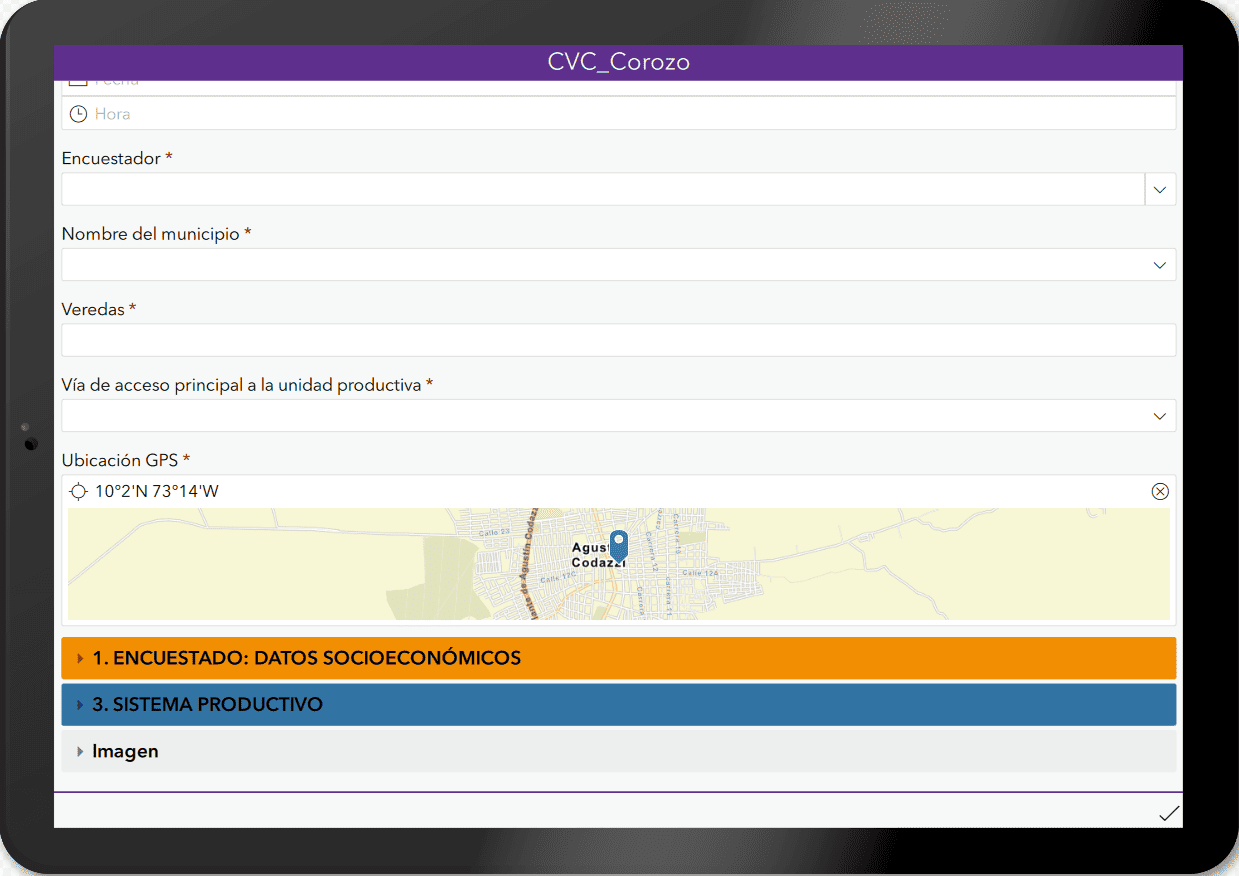
The data collection instrument was designed with a structured and modular approach to comprehensively capture the elements shaping the current corozo value chain dynamics, using ArcGIS Survey123. The following table summarizes the thematic modules included in the survey:
Socioeconomic Information: Includes variables such as age, gender, education level, household composition, productive roles, main sources of income, and level of dedication to corozo-related activities.
Productive Unit Characterization: Covers the type of productive unit, size, location, access to public services, available infrastructure, and tools used for harvesting and collection.
Productive System: Harvesting and Collection: Includes harvesting practices, collected volumes, frequency, main harvesting sites, means of transportation, storage conditions, prices received, and technical or logistical barriers.
Data Collection
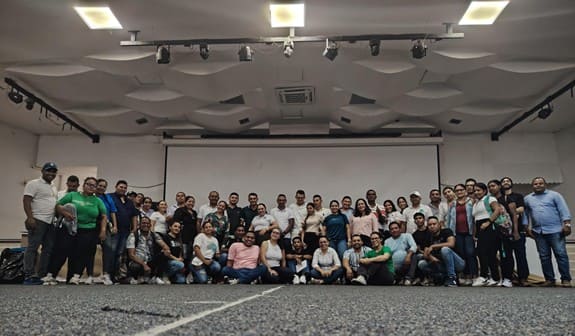
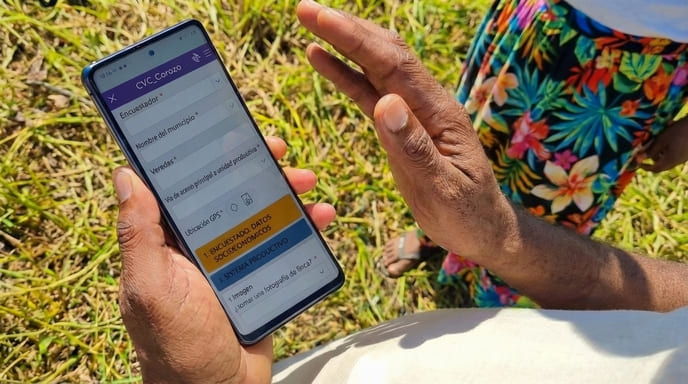
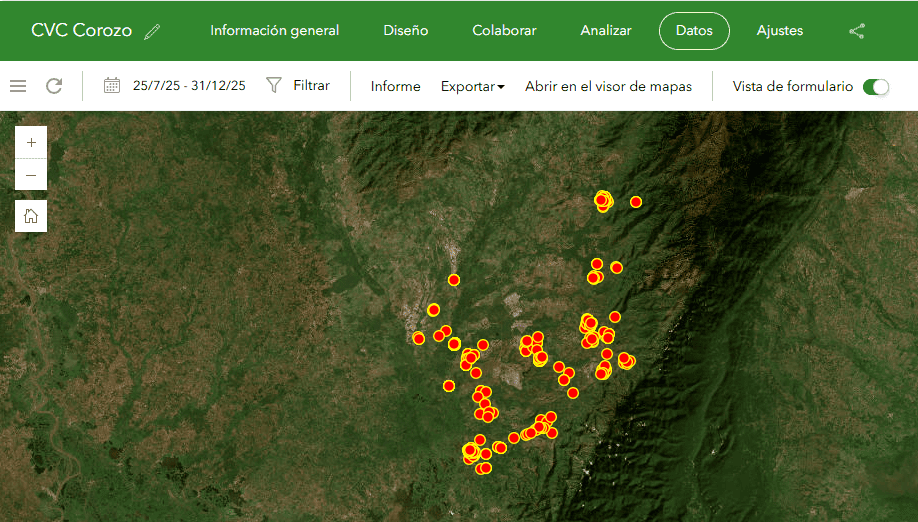
The implementation of the survey was carried out through a coordinated data collection effort between the Humboldt Institute and ASOTEPROS. Researchers from the Institute trained ASOTEPROS field personnel on the objectives of the survey and the use of Survey123. Fieldwork took place between July and August 2025 using mobile devices with structured digital forms, ensuring systematic and real-time coverage. The process was complemented with observation records, georeferenced survey points, and daily monitoring of field performance to allow timely operational adjustments.
This methodology resulted in a robust, consistent database aligned with the objective of characterizing the current state of the corozo value chain in the Life Corridor. The modular survey structure, along with the use of Survey123, ensured reliable and standardized information on socioeconomic, productive, organizational, and territorial aspects of the involved actors. This serves as a fundamental input for identifying opportunities and challenges, supporting the design of strategies to strengthen sustainability and economic development for collectors, aggregators, and other actors within the corozo value chain.
Results
Preliminary results derived from the processing and visualization of data in the interactive dashboard provide an integral understanding of the current corozo value chain in the Cesar Life Corridor (see dashboard). Through thematic modules—socioeconomic, productive unit, productive system, and geographic distribution—the dashboard reveals patterns, dynamics, and challenges that allow for a clearer understanding of how the chain operates, identification of structural gaps, and orientation of intervention strategies.
Overall, the dashboard integrates information from 414 surveyed individuals, identification and georeferencing of 45 private properties, and the registration of 12,042 reported corozo palms. This robust database enables dynamic visualization of actor distribution, socioeconomic characteristics, harvesting and collection practices, and commercial flows between municipalities.
The socioeconomic analysis shows that most collectors are not part of an association (91.79%), reflecting limited collective organization and constrained negotiation capacity. Most participants are collectors, with more than 230 individuals identified in this role, followed by processors, aggregators, and vendors. This confirms the primarily extractive nature of the current corozo chain.
Education levels are concentrated in primary and secondary schooling, representing more than 75% of respondents. This correlates with the informal labor dynamics characterizing the activity and highlights opportunities for strengthening through technical and business training processes. Regarding ethnicity, 52% of respondents identified as Afro-descendant, followed by individuals not affiliated with an ethnic group. This aligns with the historical and social composition of the region’s rural areas.
Many respondents engage in corozo-related activities daily, underscoring its economic relevance as either a primary or supplementary income source. Harvesting occurs mainly on private properties belonging to acquaintances, which reflects trust-based relationships, informal agreements, and territorial dependency between collectors and landowners.
The characterization of productive units revealed key aspects of household context, land use, and technical capacities related to productive activities. Results indicate heterogeneous practices across farms linked to corozo harvesting in terms of land use, productive activities, and demographic composition.
On average, 43.75% of farm area is dedicated to pastures, followed by forest (31.25%), natural regeneration areas (12.5%), and smaller categories. This distribution shows that extensive cattle ranching remains the dominant productive activity, coexisting with forest remnants and regeneration areas that serve as corozo habitats. These forested areas are crucial for ecological sustainability and reinforce the relationship between rural production practices and biodiversity conservation.
Household structure is characterized by a significant proportion of youth and working-age adults, indicating potential for adopting new productive practices, although constrained by informality and limited technical training opportunities. Approximately 73.33% of respondents operate under a pastoral production system, where corozo coexists with other species, though at a smaller scale.
Self-perception of technical knowledge is relatively high, with average scores of 4/5 for Good Agricultural Practices, fertilization and nutrition, and integrated pest management. However, biosecurity scored slightly lower (3/5), indicating an opportunity for improvement. Reported benefits received in the past three years include credit access, training, infrastructure development, and entrepreneurship support; however, the number of beneficiaries is still limited.
Key productivity constraints include lack of technology and machinery, limited financing access, high input costs, and adverse climate conditions. These factors restrict the ability of collectors to expand production, improve quality, or advance toward local processing.
The corozo productive system in the Life Corridor is shaped by a complex territorial dynamic where harvesting, aggregation, and commercialization are driven by seasonality, transportation availability, and informal rural market conditions. Municipalities such as La Jagua de Ibirico, El Paso, and Agustín Codazzi function as strategic trade nodes, connecting collectors with consumers, intermediaries, and processors.
The chain is largely driven by collectors, with more than 240 individuals identified in this role, while processors, aggregators, and producers participate in smaller proportions. This confirms the dominance of the primary extraction stage and the still-limited development of value-added processes. Many collectors complement corozo with other activities, such as livestock, commerce, services, agriculture, and fishing, meaning corozo often represents an additional income source.
Activity levels peak between July and September, corresponding with high fruit availability, while early-year months represent a low season. Seasonal fluctuations also affect traded volumes and prices, influencing income stability.
Access to harvesting sites occurs mainly through informal agreements based on trust rather than formal permits. Most corozo is harvested from tree-dotted pastures and wetland areas where the palm grows naturally. Transportation primarily relies on motorcycles, walking, and bicycles.
Commercialization remains highly informal. Transactions are typically carried out using standardized sacks, with only one in four respondents using weighing instruments, which may create inconsistencies in payment. Most production is sold directly to consumers, with limited participation from companies or associations. Prices vary seasonally, increasing when availability decreases and vice versa.
Overall, the corozo productive system is characterized by traditional practices, local trade networks, and strong ecological seasonality. While culturally rooted and functional, the system faces significant challenges in technology adoption, process standardization, transparency, and market diversification. Addressing these constraints presents key opportunities to strengthen the corozo value chain.
References
1.
Garcı́a H, Corzo G, Isaacs-Cubides JP, Etter A Distribución y estado actual de los remanentes del bioma de bosque seco tropical en colombia: Insumos para su gestión. In: El bosque seco tropical en colombia Instituto de Investigación de Recursos Biológicos Alexander von Humboldt; 2014. pp. 228–51.
2.
Casas LF, Gamba-Trimiño C, Benavides K Corozo de lata (bactris guineensis). In: Bernal R, Galeano G, editors. Cosechar sin destruir: Aprovechamiento sostenible de palmas colombianas Universidad Nacional de Colombia; 2013. pp. 102–8.
3.
Casas Caro LF Protocolo de manejo sostenible de frutos de corozo (bactris guineensis) en la jurisdicción de la corporación autónoma regional del cesar. Instituto de Investigación de Recursos Biológicos Alexander von Humboldt; 2024.
4.
Galeano G, Vásquez A, Brieva E, Garcı́a N Biologı́a y dinámica poblacional del corozo de lata (bactris guineensis: Arecaceae) en el caribe colombiano. Fondo Patrimonio Natural; Parques Nacionales Naturales; USAID; Universidad Nacional de Colombia; 2015.